India Bags Garment Orders Worth Tk 3,100 Crore Shifted from Bangladesh
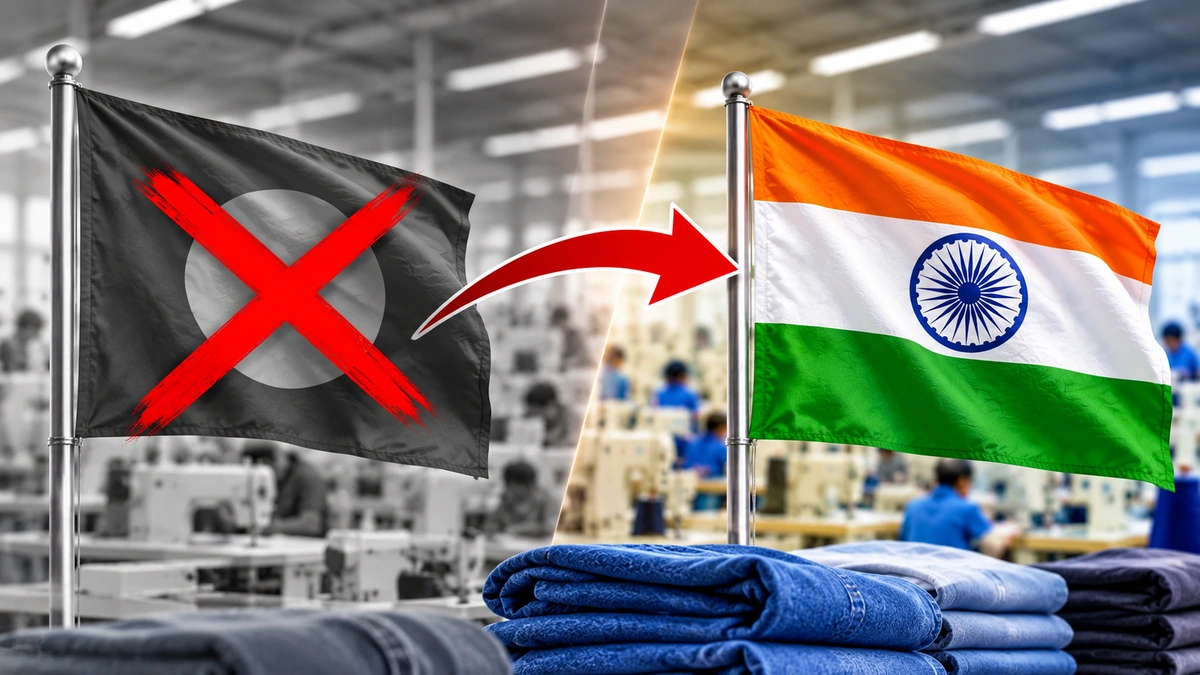
Global retailers shifted $254 million in garment orders from Bangladesh to India and other Asian hubs amid labour unrest. The move caused Indian textile stocks to rise and raised concerns about the stability of Bangladesh's export sector.
Global fashion retailers have shifted garment orders worth approximately $254 million away from Bangladesh, with most of the business diverted to India. The transfers occurred between 1 and 18 November, according to a Reuters report citing three Bangladeshi factory owners. The value of the shifted orders is equivalent to approximately Tk 3,100 crore, based on an exchange rate of Tk 122 per US dollar.
The brands involved reportedly include Zara, H&M, Marks & Spencer and Celio. However, none of the companies have publicly confirmed the reported order transfers. Zara's parent company, Inditex, declined to comment to Reuters, while H&M, Marks & Spencer and Celio did not respond to requests for comment. Vietnam, Cambodia and Indonesia also received some of the diverted orders, though India emerged as the primary beneficiary.
The shift in sourcing follows weeks of labour unrest in Bangladesh's major garment manufacturing hubs, including Dhaka, Gazipur and Narayanganj. Garment workers protested over wages and working conditions, with demonstrations escalating into clashes with police, factory vandalism and highway blockades. The disruption forced hundreds of factories to temporarily suspend operations, affecting thousands of workers and raising concerns among international buyers about the reliability of Bangladesh's manufacturing operations.
The Bangladesh Garment Manufacturers and Exporters Association (BGMEA) stated that the protests have caused production losses exceeding $400 million. M. Mohiuddin Chowdhury, a director of the BGMEA, told Reuters that rising wages, utility expenses and raw material costs were adding to manufacturers' financial pressures. He noted that competing manufacturing hubs such as India can typically complete production and delivery within 60 to 90 days, compared with approximately 120 days in Bangladesh.
Chowdhury added that India can offer buyers a delivery advantage of around one week, while Vietnam and Cambodia can reduce lead times by as much as 15 days. As global retailers face strict deadlines, reliable delivery and supply-chain stability are increasingly influencing sourcing decisions. The combination of labour unrest and rising production costs has weakened Bangladesh's competitive edge in the global apparel market.
The garment workers' protests have largely centred on demands for higher minimum wages amid rising living costs. Workers initially demanded an increase in the monthly minimum wage from Tk 12,500 to Tk 30,000. On 1 November, the Bangladesh government formed a six-member minimum wage board to review the demands. Following several weeks of negotiations, the board approved a 36% increase on 25 November, raising the minimum monthly wage from Tk 12,500 to Tk 17,000.
However, the revised amount remained below workers' revised demand of Tk 18,000, and fresh clashes with police followed the announcement. Industry leaders have warned that the wage increase could further narrow Bangladesh's labour-cost advantage over competing manufacturing countries, although labour groups maintain that workers' wages remain insufficient. The ongoing uncertainty has contributed to the reluctance of international buyers to place new orders.
Following the Reuters report, shares of several Indian textile companies rallied in the stock market. Gokaldas Exports shares surged as much as 11%, while Trident gained approximately 5%. Other textile companies, including Welspun Living, KPR Mill and Vardhman Textiles, also recorded gains. The market reaction reflects growing expectations that Indian manufacturers could benefit from international brands diversifying their sourcing operations.
Bangladesh's ready-made garment industry employs more than four million people and accounts for over 80% of national export earnings. The sector has long benefited from competitive production costs and its established position in the global apparel supply chain. However, industry leaders fear that temporary order diversions could turn into permanent sourcing decisions if production disruptions and uncertainty continue.
Khan Monirul Alam, managing director of Alps Apparels Group, told Reuters that most of his buyers had stopped placing new orders since 1 November. He stated that some orders had reportedly been shifted to other countries, while others were postponed or cancelled. Industry representatives warn that international buyers may not necessarily return to Bangladesh even after the current situation improves. Restoring industrial stability, ensuring uninterrupted production, addressing energy shortages and improving delivery efficiency will be critical to maintaining Bangladesh's competitiveness in the global garment market.
You may like

Donald Trump visits Manila and declares major US-Philippines trade deal
November 28, 2026

Allstate outage disrupts website, apps and roadside service
November 28, 2026

Bangladesh to replace mouja land rates with market-based valuation
November 28, 2026
Elected News
-
Bangladesh Seeks UN Women Support on Digital Harassment and Women’s Empowerment
-
Bangladesh, Australia Discuss Human Trafficking, Irregular Migration and Rohingya Crisis
-

Bangladesh Plans Internet-Free Access to Mobile Banking and Financial Apps
-
DU to Open Undergraduate Admission Applications on 11 November, Tests Begin 5 December


