Rice or Roti: Experts guide you to make the healthier choice
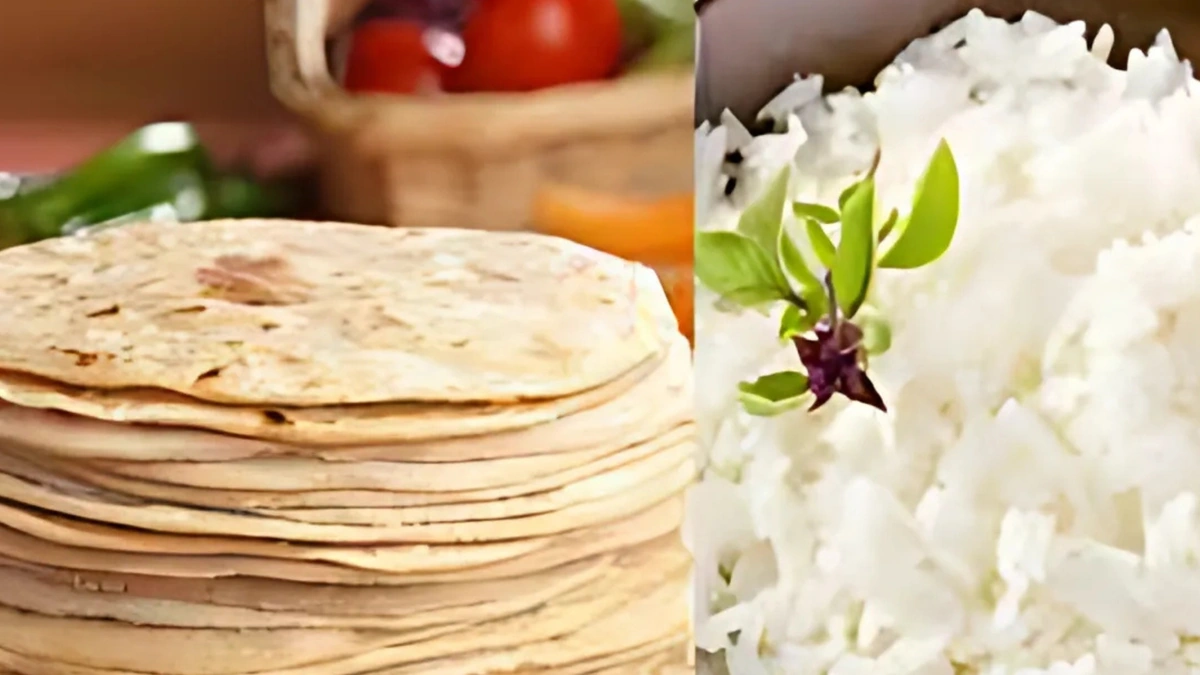
Whether rice or roti is better for health is often a topic of debate. Many people eat both rice and roti for dinner, considering it a way to maintain balance.
In Bangladesh, as well as in Indian states like Bihar, West Bengal, and Odisha, rice is the staple food. In contrast, people in Punjab or Madhya Pradesh often prefer roti. Some even consider roti to be healthier than rice.
However, experts do not view this debate solely in terms of rice versus roti.
Whether your plate contains rice or roti depends on many factors. A key consideration is what type of rice or roti you are eating and how you are eating it—that is more important than simply choosing one over the other. Both rice and roti contain carbohydrates.
Generally, it is believed that roti has fewer carbohydrates than rice, making it a healthier choice.
Nazneen Hussain, Head of Dietetics at the health network Nutrifai Today and a Mumbai-based dietitian, says, “If you eat whole wheat or high-fiber roti, it is beneficial. But if the roti is made of refined flour, it is similar to rice, as it raises blood sugar levels quickly.”
She adds that consuming highly polished, thin rice is not good for health, whereas unpolished or small-grain rice is comparatively better. Considering fiber content, doctors and dietitians often recommend brown rice or unpolished rice.
Another suggestion is to eat rice with lentils, yogurt, or vegetables. Preparing dishes like khichuri or pulao is also considered healthy.
Dr. M. Wali, Senior Consultant at Gangaram Hospital, Delhi, says, “The refined flour we consume today is turning into white poison, like sugar and salt. Our diet is also imbalanced because we eat too much rice or roti and too few vegetables. Eating more vegetables with rice lowers its glycemic index, meaning the sugar from rice is released slowly into the body, making rice better than roti in such cases.”
Dr. Wali adds that if roti dough is mixed with vegetables like spinach or bottle gourd instead of just plain flour, it can also be beneficial.
The fundamental difference between rice and roti is that rice is better suited for those who perform heavy physical labor or require more energy.
If someone wants to avoid overeating or consume less, whole wheat roti is a good alternative because it is high in fiber and keeps the stomach full for longer.
Mala Monral, a dietitian at the All India Institute of Medical Sciences (AIIMS), Delhi, says, “Roti eaten with good protein is even better. Vegetarians can pair roti with vegetables or lentils.”
She emphasizes that what a person should eat depends on their work and lifestyle. People with sedentary jobs need fewer calories, so they are advised to eat roti instead of rice to avoid weight gain.
According to Mala Monral, each individual’s caloric requirement depends on activity level and age. For example, if someone needs 1,600 kcal per day, it is recommended that 60% come from carbohydrates, 20% from protein, and 20% from fat. Carbohydrates come from foods like roti, rice, idli, or upma, while protein comes from lentils or, for non-vegetarians, eggs.
Whether a person should eat rice or roti largely depends on their health. Generally, patients with diabetes or blood sugar issues are advised to avoid rice and consume more high-fiber foods.
It is notable that rice stored in the fridge is considered better in terms of fiber content. Nazneen Hussain explains, “Refrigerated rice converts its starch into resistant starch, which acts like fiber. This prevents a sudden spike in blood sugar when eaten.”
Does regional preference affect choice?
It is believed that foods one grows up eating are easier to digest and provide greater satisfaction.
Nazneen Hussain adds, “The staple food produced in a region usually becomes the main diet for its people. For example, rice is the staple for people in Kashmir. For them, roti cannot be considered healthier than rice.”
Dr. Wali notes, “Many people don’t even know how to cook roti properly. In India, most people eat rice. Even diabetes patients in South India consume rice, often cooked with various ingredients so that it doesn’t overload the pancreas.”
Related News
You may like



Tom Holland Says Marvel Has a Plan for the Next Spider-Man
August 1, 2026
Elected News
-
Bangladesh Seeks UN Women Support on Digital Harassment and Women’s Empowerment
-
Bangladesh, Australia Discuss Human Trafficking, Irregular Migration and Rohingya Crisis
-
Bangladesh Plans Internet-Free Access to Mobile Banking and Financial Apps
-

DU to Open Undergraduate Admission Applications on 11 November, Tests Begin 5 December


