Benin Presidential Election Tests Talon’s Legacy and National Stability
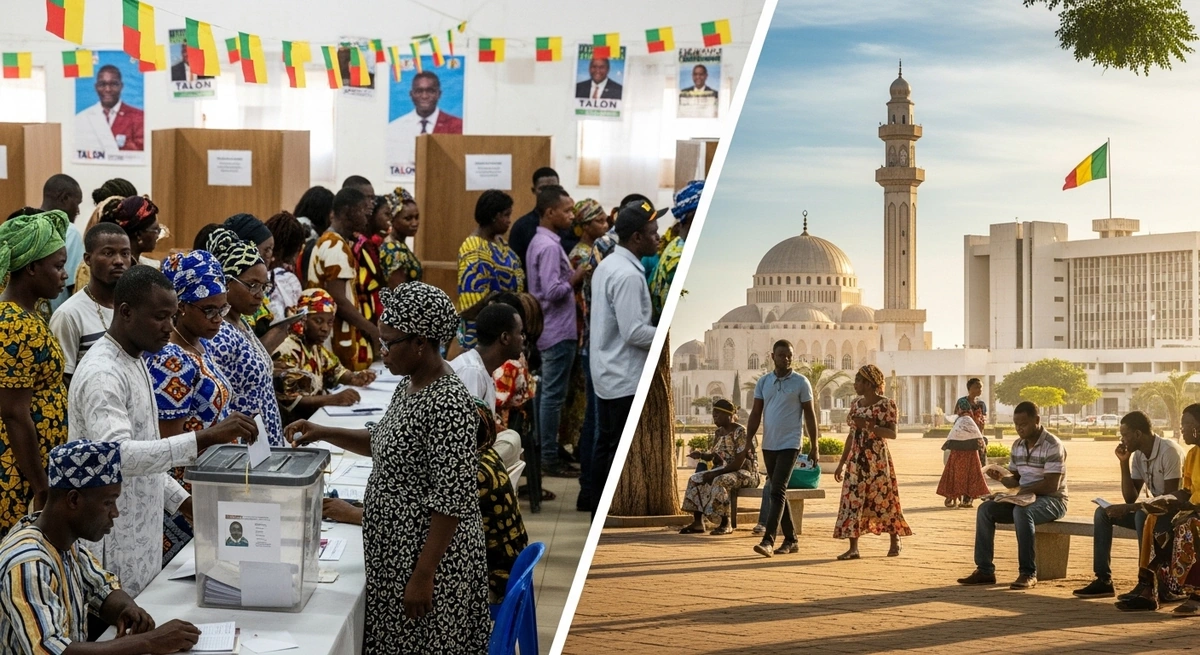
Benin heads to the polls on Sunday, April 12, to choose a new president after Patrice Talon completes his second and final term, closing a decade in power marked by steady economic growth, rising insecurity in the north, and mounting criticism over political restrictions.
The race has only two candidates. Finance Minister Romuald Wadagni, the governing coalition’s nominee and Talon’s preferred successor, enters as the clear favourite. His challenger is Paul Hounkpè of the Cowry Forces for an Emerging Benin. Nearly 8 million voters are eligible to cast ballots, and a candidate needs more than 50 percent to avoid a runoff set for May 10.
Wadagni has built his campaign around continuity. He points to a decade of growth under Talon, including 7 percent economic expansion in 2025, stronger state revenues, and investment in trade, agriculture, infrastructure, and the port of Cotonou. Yet the benefits of that growth have not been evenly shared, with poverty still entrenched in many rural areas, especially in the north.
Security is also central to the vote. Benin has faced worsening attacks in its northern borderlands as armed groups linked to al Qaeda and Islamic State expand south from the Sahel. Reuters reported that a December coup attempt was fuelled in part by anger over conditions facing soldiers deployed in the north. One major attack killed 54 Beninese soldiers last year, and another killed 15 last month.
The election is also being watched as a test of Benin’s democratic trajectory. The main opposition force failed to get a candidate onto the ballot after sponsorship rules blocked its nominee, and pro government parties won all 109 seats in parliament in January after the opposition failed to clear a 20 percent threshold. Rights groups say political space has narrowed sharply in recent years, citing arbitrary detentions, tighter limits on demonstrations, and growing pressure on independent media.
A constitutional reform approved in November extended presidential terms from five years to seven and created a senate with some members appointed by the president, adding to opposition concerns over a further concentration of power. For many voters, the election now turns on one question: whether Benin wants continuity under a candidate tied closely to Talon’s record, or a break from a system critics say has become less open and less competitive.
Related News





You may like




Tom Holland Says Marvel Has a Plan for the Next Spider-Man
August 1, 2026
Elected News
-
Bangladesh Seeks UN Women Support on Digital Harassment and Women’s Empowerment
-
Bangladesh, Australia Discuss Human Trafficking, Irregular Migration and Rohingya Crisis
-
Bangladesh Plans Internet-Free Access to Mobile Banking and Financial Apps
-
DU to Open Undergraduate Admission Applications on 11 November, Tests Begin 5 December


