Bangladesh to Introduce Music, Drama and Dance in Primary School Curriculum
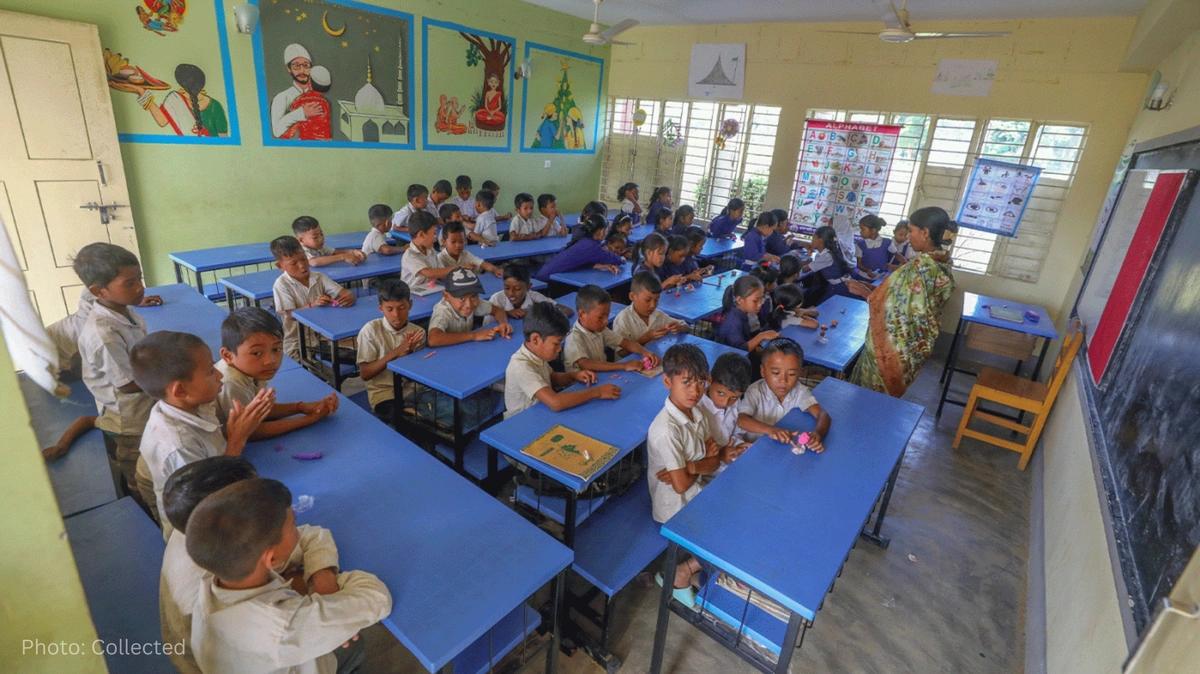
The government has announced plans to gradually integrate creative arts subjects, including music, drama, dance, and fine arts, into the national primary education curriculum starting from 2027.
The government of Bangladesh has announced a major reform in primary education, confirming the inclusion of music, drama, dance, and fine arts and crafts as part of the national curriculum in the coming years.
State Minister for Primary and Mass Education Bobby Hajjaj said on June 10 that a new textbook titled “Art and Culture” will be introduced for Class IV students beginning in 2027. The initiative is part of a broader education reform plan aimed at expanding creative learning opportunities for young students across the country.
According to the ministry, the creative arts subjects will be gradually implemented in the curriculum before being fully incorporated into primary education by 2028 under the revised national education framework.
Officials stated that the new curriculum is designed to promote holistic development among children by encouraging creativity, cultural awareness, and emotional expression alongside traditional academic subjects. The inclusion of performing and visual arts is expected to play a key role in reshaping early childhood education in Bangladesh.
The announcement was made during a views-exchange meeting organized by the Ministry of Primary and Mass Education, where education policymakers, curriculum experts, and government officials discussed ongoing reforms in the primary education sector.
Speaking at the event, State Minister Bobby Hajjaj emphasized the importance of integrating cultural education into early learning stages. He noted that exposure to music, drama, and visual arts can significantly contribute to cognitive development and improve students’ communication and critical thinking skills.
Education officials also highlighted that the updated curriculum aligns with global trends in primary education, where creative subjects are increasingly being introduced to enhance student engagement and reduce rote learning practices.
The ministry plans to roll out training programs for teachers to ensure they are equipped to deliver the new subjects effectively. Curriculum development specialists are also working on designing appropriate teaching materials and assessment methods for the creative arts modules.
Parents and educators have shown mixed reactions to the announcement, with many welcoming the initiative as a positive step toward modernizing education, while others have raised questions about implementation readiness and resource availability, particularly in rural areas.
Despite the challenges, officials remain optimistic that the phased introduction will allow schools to gradually adapt to the new system. They believe the reforms will ultimately help nurture a more balanced education system that supports both academic excellence and creative development.
With the rollout scheduled over the next few years, Bangladesh’s primary education system is expected to undergo one of its most significant transformations in recent history, placing greater emphasis on arts, culture, and holistic student growth.
Related News

You may like



Tom Holland Says Marvel Has a Plan for the Next Spider-Man
August 1, 2026
Elected News
-
Bangladesh Seeks UN Women Support on Digital Harassment and Women’s Empowerment
-
Bangladesh, Australia Discuss Human Trafficking, Irregular Migration and Rohingya Crisis
-
Bangladesh Plans Internet-Free Access to Mobile Banking and Financial Apps
-
DU to Open Undergraduate Admission Applications on 11 November, Tests Begin 5 December


