The Untold Story of the Internet’s Inventor
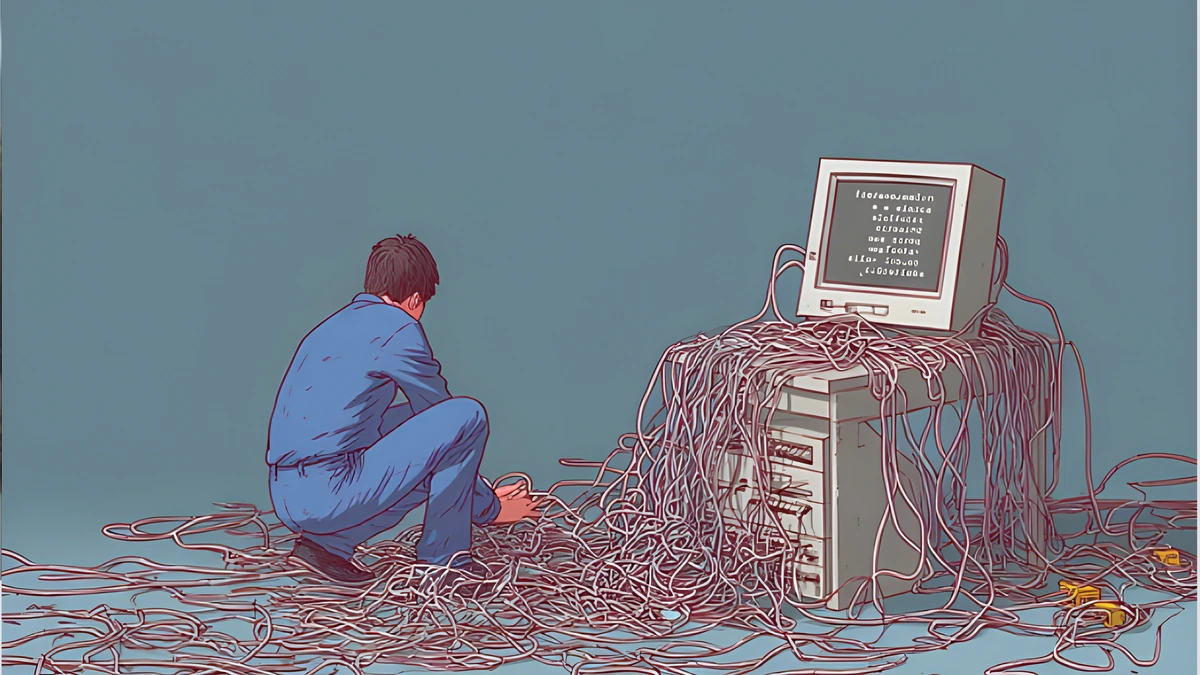
Who invented the Internet? This question is not easy to answer. Just as it's difficult to name a single inventor of the electric light or the telephone, it's equally hard to credit just one person for the invention of the Internet. Behind every great invention lies the contribution of many individuals. The story of the Internet is no different. It is not the result of one person's efforts it is the outcome of decades of collaborative work by numerous scientists and engineers. The Internet we use today is built upon the efforts of many pioneers. So, let’s explore the story behind it.
When we talk about the Internet, one name that often comes up is British computer scientist Sir Tim Berners-Lee.
However, he did not invent the entire Internet. He invented the World Wide Web, which is just one important part of the modern Internet.
British Computer Scientist Sir Tim Berners-Lee
In March 1989, he proposed the concept of the World Wide Web while working at CERN (the European Organization for Nuclear Research) in Geneva, Switzerland. His main goal was to make information exchange easier for scientists across the world.
To achieve this, he developed technologies like HTML, HTTP, and URL, which still serve as the foundation of the web today. He also created the world’s first web browser. On December 20, 1990, he launched the first website in history: info.cern.ch.
However, Berners-Lee himself acknowledged that many of the technologies he used such as hypertext and the Internet were already invented. He simply integrated them successfully into a new system.
Interestingly, Berners-Lee has become increasingly concerned about his creation. He realized its potential dangers after the 2018 Facebook–Cambridge Analytica data scandal. He saw that the web was being used for both good and harmful purposes, including the spread of misinformation.
The Pioneers Behind the Web
While Tim Berners-Lee created the World Wide Web, the foundation of the Internet was laid by several other scientists. Let’s learn about some of them:
J.C.R. Licklider
American psychologist and computer scientist J.C.R. Licklider is often called the visionary of the Internet. In 1962, he proposed the idea of a “Galactic Network”a global network where everyone could access data and programs from anywhere. While working at the Advanced Research Projects Agency (ARPA) under the U.S. Department of Defense, he took steps toward realizing this dream.
Leonard Kleinrock
American computer scientist Leonard Kleinrock introduced the theory of packet switching in 1961, which became a core principle of the modern Internet. According to his theory, computers could communicate by sending small "packets" of data. In 1964, he published a book on this subject. This concept is still fundamental to Internet data transmission.
Paul Baran
Polish-American engineer Paul Baran proposed the idea of a decentralized network one without a single point of control. In the 1960s, he developed this concept for the U.S. Air Force. The idea was to keep the network functional even if parts of it were destroyed by enemy attacks.
Lawrence Roberts
American scientist Lawrence Roberts was the chief scientist at ARPA. He combined the ideas of Baran and Kleinrock to build a working network. In 1967, he published the ARPANET plan. ARPANET is considered the predecessor of the Internet. On October 29, 1969, the first message was sent through ARPANET between UCLA and Stanford University.
Vint Cerf and Robert Kahn
American computer scientists Vint Cerf and Robert Kahn are often called the "fathers of the Internet." Together, they developed TCP/IP, a universal communication protocol that allows computers across different networks to talk to each other. It was published in 1974, and on January 1, 1983, ARPANET officially adopted TCP/IP. This date is often celebrated as the birth of the Internet.
So, it’s clear that the Internet is not the invention of a single individual. It is the collective result of decades of vision, hard work, and collaboration by many brilliant minds.
Source: BBC Science Focus
Related News
You may like



Tom Holland Says Marvel Has a Plan for the Next Spider-Man
August 1, 2026
Elected News
-

Bangladesh Seeks UN Women Support on Digital Harassment and Women’s Empowerment
-

Bangladesh, Australia Discuss Human Trafficking, Irregular Migration and Rohingya Crisis
-

Bangladesh Plans Internet-Free Access to Mobile Banking and Financial Apps
-

DU to Open Undergraduate Admission Applications on 11 November, Tests Begin 5 December


