Drone Technology Revolutionizes Agriculture in Bangladesh
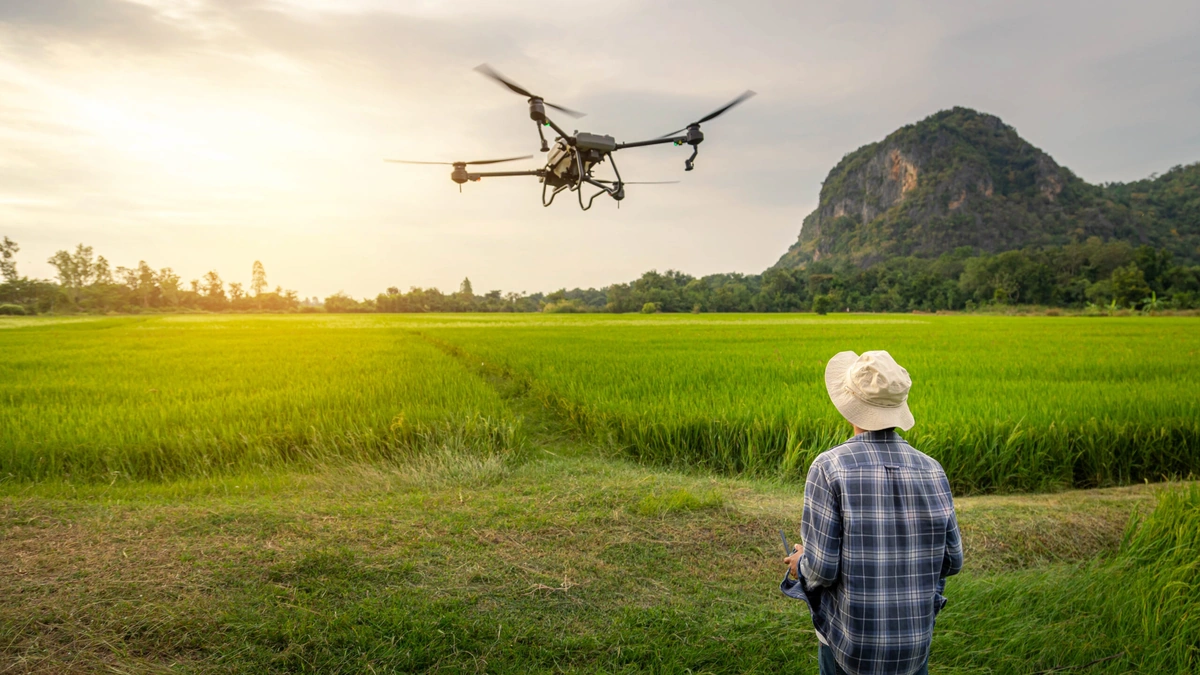
The use of drones for pesticide and fertilizer application in agriculture has significantly reduced time and costs while minimizing health risks for farmers.
Drone technology is opening a new frontier in Bangladesh’s agricultural sector, offering a more efficient, cost-effective, and safer alternative to traditional methods of pest control and fertilization. As part of the ongoing modernization of agriculture, drones are now being used to spray pesticides and fertilizers in the fields, dramatically reducing the time and labor required for these tasks.
According to agricultural experts and farmers, drones are capable of applying the correct amount of pesticides and fertilizers to fields, which not only improves crop yield but also protects farmers from health risks associated with direct chemical exposure. While it takes a person up to two hours to apply pesticides to one acre of land using conventional methods, a drone can complete the task in just 3 to 5 minutes, significantly lowering costs.
Genius Farms Limited and Flymake, two companies pioneering this technology, are working together to provide drone-based pesticide application services in regions such as Narsingdi and Manikganj, supported by the Bangladesh Agricultural Research Institute. These locally manufactured drones, equipped with Chinese components, are capable of carrying up to 5 kilograms of pesticide.
Farmers can avail of these services through local cooperatives, and for a nominal fee, drones are deployed to carry out pesticide spraying. The cost of using a drone for one acre of land is approximately 200 to 300 taka, compared to the 500 to 1,000 taka required when using manual labor. The drones not only save time but also reduce the amount of pesticide used, making the entire process more environmentally friendly and efficient.
Flymake’s CEO Jawad Rashid expressed plans to develop this service into a full-fledged business model, with the goal of increasing the availability of drones in rural areas. Additionally, the company is working on expanding the pesticide-carrying capacity of drones to 10-20 liters, further enhancing their functionality.
The use of drones is a key step towards modernizing the agricultural sector in Bangladesh, where small farm sizes have made traditional methods less efficient. As drone technology becomes more widely used, it is expected to transform agriculture and reduce the dependency on manual labor, making farming more sustainable and economically viable.
Moreover, companies like Drone Bangladesh are also contributing to this technological revolution, offering a variety of drones suitable for agricultural use. With the growing demand for smaller drones capable of carrying up to 10 liters of pesticides, the country’s drone industry is poised to grow rapidly in the coming years, further improving agricultural practices across Bangladesh.
Related News
You may like




Tom Holland Says Marvel Has a Plan for the Next Spider-Man
August 1, 2026
Elected News
-
Bangladesh Seeks UN Women Support on Digital Harassment and Women’s Empowerment
-

Bangladesh, Australia Discuss Human Trafficking, Irregular Migration and Rohingya Crisis
-

Bangladesh Plans Internet-Free Access to Mobile Banking and Financial Apps
-

DU to Open Undergraduate Admission Applications on 11 November, Tests Begin 5 December


