Government Unveils Master Plans to Roll Out Smart Agriculture Nationwide
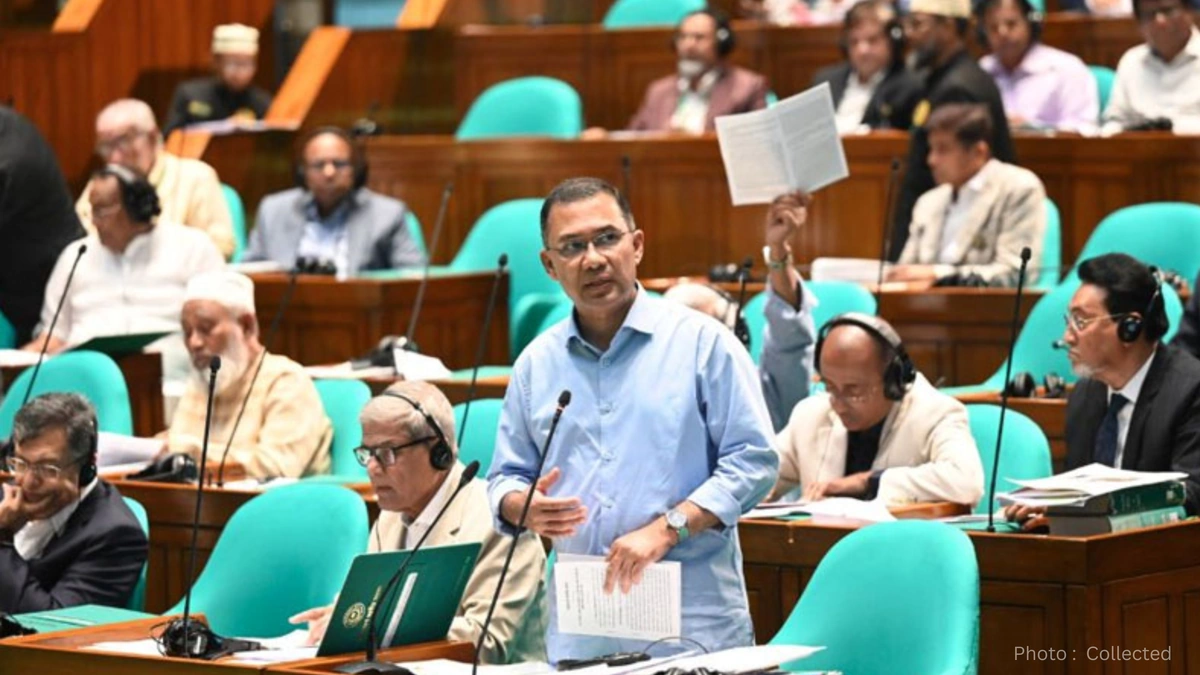
Prime Minister outlines seven-point strategy, introduces Farmer Card system to modernize agriculture and support climate resilience
The government has approved a series of master plans aimed at introducing “smart agriculture” across the country, focusing on boosting production, diversifying crops, and addressing climate change challenges, Prime Minister Tarique Rahman told parliament on Wednesday.
Responding to a written question from Tangail-6 lawmaker Md Rabiul Awal during a session chaired by Speaker Hafiz Uddin Ahmed, the Prime Minister said the initiative is part of a broader strategy to modernize the agricultural sector and ensure long-term food security.
He noted that agriculture remains central to Bangladesh’s economy, contributing significantly to food supply, poverty reduction, and national development, but faces growing pressure from climate change, population growth, shrinking arable land, and technological gaps.
As part of the new plan, the government launched the “Krishak Card” on April 14, which will provide farmers with access to ten key services. These include subsidized agricultural inputs, government incentives, low-cost machinery, irrigation support, easy-term loans, crop insurance, fair market access, training facilities, digital weather and market updates, and pest management guidance. The system will be introduced in phases nationwide.
The Prime Minister also outlined a seven-point agricultural development strategy.
The plan includes expanding high-yield seed usage, balanced fertilizer application, and modern irrigation systems, along with the excavation of 20,000 kilometers of canals and increased mechanization support through subsidies.
Crop zoning has been introduced to bring unused land under cultivation and improve land utilization efficiency. The government also plans to reduce dependence on rice by promoting diversification into fruits, vegetables, pulses, oilseeds, spices, and flowers.
To support farmers, subsidies will be delivered through the Farmer Card, alongside low-interest loans and crop insurance schemes. In the current fiscal year, Tk 70 crore has been allocated for agricultural rehabilitation, with Tk 401.60 crore reportedly disbursed for free seeds and fertilizers, benefiting over 25 lakh small and marginal farmers.
Post-harvest infrastructure is also being expanded through the construction of cold storage facilities and warehouses, as well as plans to develop export-oriented agricultural zones and regional procurement centers in the northern region.
The strategy also prioritizes research and innovation, with institutions such as BARI, BRRI, and BINA developing high-yield, disease-resistant, and climate-resilient crop varieties.
Finally, the government emphasized climate-smart agriculture, including salinity, drought, and flood-tolerant crops, precision farming technologies, and digital tools such as the “Khamari Apps” platform to support farmers with real-time information and guidance.
Related News




You may like




Tom Holland Says Marvel Has a Plan for the Next Spider-Man
August 1, 2026
Elected News
-
Bangladesh Seeks UN Women Support on Digital Harassment and Women’s Empowerment
-
Bangladesh, Australia Discuss Human Trafficking, Irregular Migration and Rohingya Crisis
-
Bangladesh Plans Internet-Free Access to Mobile Banking and Financial Apps
-
DU to Open Undergraduate Admission Applications on 11 November, Tests Begin 5 December


