Does wearing glasses regularly help correct your eyesight?
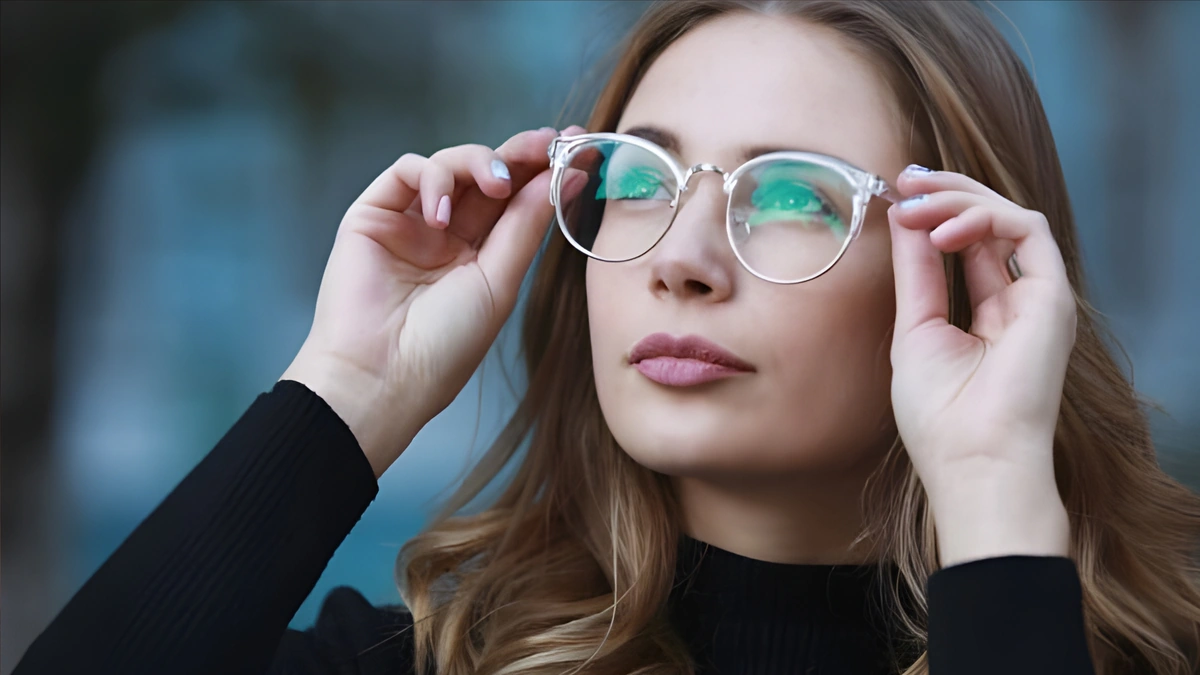
We often wonder why glasses are needed, who actually needs them, and whether it’s possible to stop wearing them after some time. Let’s clear up some common misconceptions about this.
We actually see with our eyes, but it’s the brain that completes the process of seeing. Simply put, the eyes are the instruments for vision, while the brain is the center that interprets the images.
Let’s explain this a bit more clearly. The process of seeing occurs in several steps. First, light from an object enters the eye and focuses on the retina, the nerve layer of the eye. The retina is then stimulated and produces electrical signals that travel to the brain. The brain forms the image, and that’s how we see things. So, if the focus doesn’t properly fall on the retina, vision becomes impaired. This is called a refractive error or a vision problem. There are two main types:
Nearsightedness (Myopia)
In this case, distant objects appear blurry. Myopia usually requires lenses with minus power. The minus lens helps move the focal point backward so that it falls directly on the retina.
Farsightedness (Hypermetropia)
With hypermetropia, there’s difficulty seeing not only distant objects but also nearby ones, such as when reading. Plus power lenses are used in this case. These lenses move the focal point forward to align correctly with the retina.
Apart from these, there’s another common condition called presbyopia, which usually occurs around the age of forty. People find it difficult to see nearby objects, read, or do detailed work like sewing. Plus power glasses are also used for this.
Causes of Vision Problems
The exact cause of refractive errors is still debated, but several risk factors are known to contribute:
-
Genetic factors (family history)
-
Racial or ethnic influences
-
Environmental factors such as long periods of close-up work like studying or drawing, especially in children. However, compared to genetics, environmental factors play a much smaller role.
-
Lack of outdoor activity may also contribute.
Symptoms of Vision Problems
-
Distant objects appear blurry.
-
Children may watch TV from a very short distance or have trouble seeing the classroom board from afar.
-
Blurred vision while reading.
-
Eye pain, headaches, or burning sensations in the eyes.
If these symptoms appear, see an eye specialist. After a vision test, the doctor will prescribe the appropriate glasses.
Common Misconceptions About Glasses
1. Regularly wearing glasses corrects your eye power.
Absolutely not. There is no direct connection between wearing glasses and improving vision power. Refractive errors progress naturally.
2. Vision problems occur because children don’t eat small fish or vegetables.
That’s not true. Refractive errors are not caused by diet. However, foods rich in vitamin A and antioxidants, such as small fish and leafy vegetables, help keep the retina healthy, which is a different issue.
3. Once you start wearing glasses, you can never stop.
This is the opposite of the truth. Especially for children, the earlier a vision problem is detected and glasses are used, the better.
If a child with vision problems doesn’t wear glasses, their visual development may be hampered, leading to amblyopia (lazy eye), which can also cause strabismus (crossed eyes). To prevent these serious conditions, glasses should be used as soon as a refractive error is diagnosed.
Proper Use of Glasses
-
Never use old and new prescriptions together.
-
Regular use helps your eyes adjust more quickly.
-
For bifocal (two-part) or progressive lenses, take time to learn which part is for distant, near, or intermediate vision adaptation takes time but happens naturally.
If vision feels off, it’s often due to frame fitting or incorrect measurements rather than the lenses themselves. Usually, the issue resolves after wearing the glasses continuously for 2–3 weeks.
Frame Selection Tips
-
The frame should suit your face shape.
-
Avoid overly large lenses or rims.
-
For bifocal or progressive glasses, slightly larger lenses are acceptable.
-
The frame should sit comfortably on the nose without pressing behind the ears.
-
For heavier faces, thick frames may look better, but if they cause discomfort, opt for a lightweight frame.
Is LASIK a Substitute for Glasses?
LASIK is a type of corneal surgery that reshapes the cornea using laser beams without any cutting. Automated machines adjust the corneal curvature to correct refractive errors.
However, LASIK is not suitable for everyone and has certain limitations. It’s not completely free from side effects. Over the long term, many patients may experience dry eyes due to reduced tear production and need to use artificial tears regularly after the procedure.
Related News
You may like


Tom Holland Says Marvel Has a Plan for the Next Spider-Man
August 1, 2026
Elected News
-

Bangladesh Seeks UN Women Support on Digital Harassment and Women’s Empowerment
-

Bangladesh, Australia Discuss Human Trafficking, Irregular Migration and Rohingya Crisis
-

Bangladesh Plans Internet-Free Access to Mobile Banking and Financial Apps
-

DU to Open Undergraduate Admission Applications on 11 November, Tests Begin 5 December


