UN AI weapons talks collapse in Geneva over Russian objections
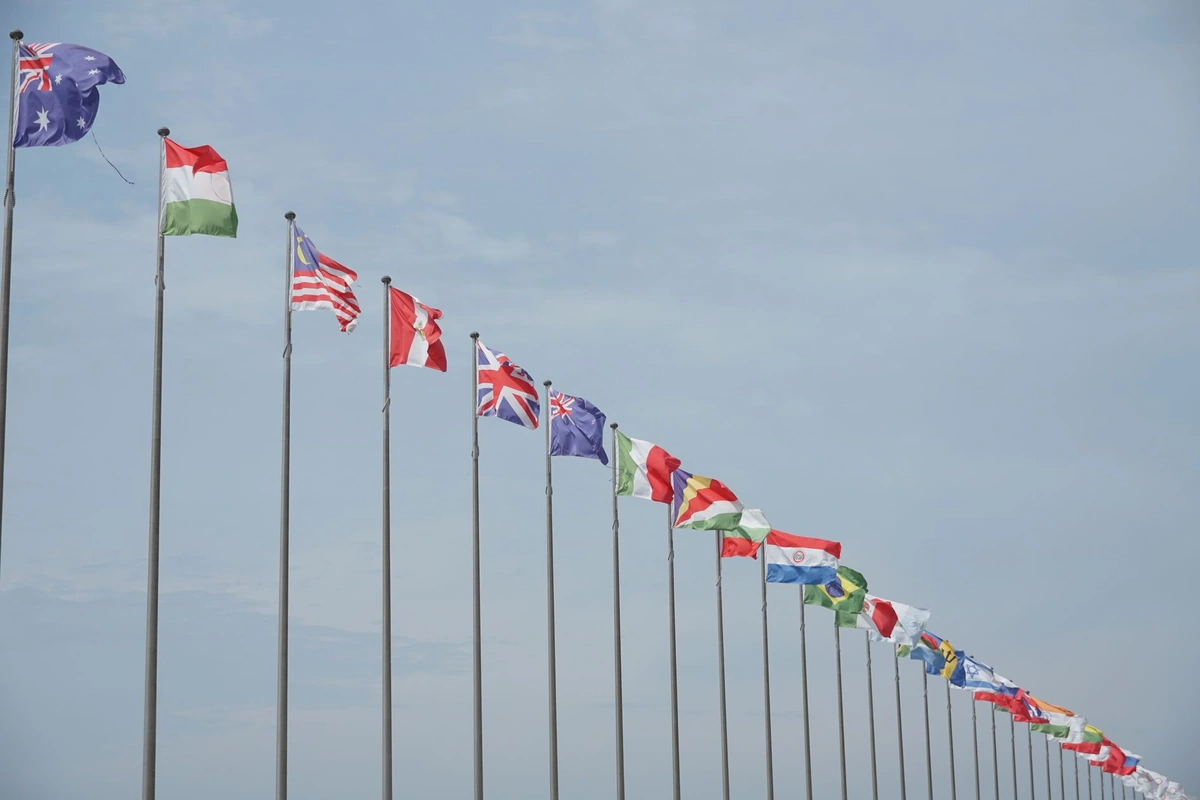
Week-long negotiations at the UN in Geneva to create a binding treaty on autonomous weapons collapsed after Russian stalling and resistance from major military powers. Countries instead agreed to a non-binding mandate extending talks until 2028 despite warnings over AI warfare.
Week-long international negotiations at the United Nations in Geneva to establish a negotiating mandate for a legally binding treaty regulating autonomous weapons collapsed early on Saturday morning following objections from Russia. The Review Conference on Conventional Weapons, which ended after all-night talks just before 5:00 am, was forced to abandon plans for an enforceable international framework on artificial intelligence in warfare. Instead, participating states adopted a significantly weaker mandate asking countries to "elaborate by consensus" a potential accord by 2028, an instrument that may carry no binding legal obligations.
The failure to secure a firm agreement occurred despite an overwhelming majority of the more than 100 states present pushing for a new international law to control lethal autonomous weapons systems, commonly referred to as killer robots and autonomous drones. A core bloc of seven nations, comprising Austria, Belgium, Brazil, Ireland, Mexico, New Zealand and Panama, had led the push for a binding treaty to be negotiated within one year, arguing that rapid technological advancement in military hardware required urgent global rules. However, because the UN forum operates strictly under a consensus mechanism requiring unanimous agreement among all 128 states parties, Russian opposition effectively blocked the initiative.
Diplomats present inside the negotiating chamber reported that Russian delegates used uniquely obstructive stalling tactics and engaged in deliberate filibustering from the opening day of the conference, refusing to work in good faith toward a binding instrument. While representatives from the United States actively sought a path toward a consensus statement, Washington also displayed reluctance to commit to a legally binding protocol that would restrict its own military development of artificial intelligence systems.
The division extended across major world powers and military alliances during the week of talks. European and NATO member states, including Ukraine, alongside China and Iran, expressed support or willingness to consider a new legally binding protocol. Conversely, defence technology powers actively exploring AI-enabled weaponry, including South Korea, Japan, Turkey, the United Kingdom, France and Germany, demonstrated resistance to being bound by new statutory limits, advocating instead for a non-binding agreement or maintaining that existing international humanitarian law is sufficient.
Voting constraints and procedural friction
The consensus requirement of the Convention on Certain Conventional Weapons (CCW) has repeatedly drawn criticism from disarmament advocates and participating governments. Operating under rules that grant any single nation veto power over decisions, the CCW has failed to pass any new laws regulating weapons systems in the past 30 years. The persistent gridlock has previously forced states to bypass the forum entirely to achieve international bans, such as the landmark 2008 treaty prohibiting cluster munitions.
Procedural tensions boiled over on the final day of the Geneva gathering when the exclusion of several non-member countries from negotiations triggered an open protest inside the floor of the chamber. The Egyptian delegation shouted directly at the conference chair in protest over the decision to bar non-member states from participating in key deliberations.
Following the adoption of the watered-down text, UN officials offered contrasting assessments of the outcome. Izumi Nakamitsu, the United Nations high representative for disarmament affairs, hailed the agreement to continue discussions as a significant achievement, while acknowledging that it represented a "glass half full or half empty" scenario. The outcome fell short of the goals set by UN Secretary-General António Guterres, who leaves office at the end of the year and had called for negotiations on a legally binding deal to be launched by 2026.
Humanitarian warnings and treaty proposals
Human rights advocates, legal experts and machine learning specialists expressed severe disappointment with the conference outcome, accusing major military powers of pushing the issue down the road while autonomous systems are actively deployed in conflict zones. Max Tegmark, a machine learning specialist at the Massachusetts Institute of Technology and founder and chair of the Future of Life Institute, stated that world leaders had failed to meet the moment, noting that states had agreed it was sufficient merely to discuss the issue for a 14th year while autonomous weapons enable atrocities.
Bonnie Docherty, senior arms adviser at Human Rights Watch who previously assisted in drafting treaties banning cluster munitions and nuclear weapons, emphasized that autonomous weapons urgently require binding international law. Docherty noted that substantive portions of a treaty framework had already been established and that a binding instrument could easily be negotiated within 15 months, dismissing a proposal by the United States to allocate five years to refine a mandate.
Addressing the assembly on Wednesday, Ambassador Frederico Meyer of Brazil warned delegates that technology was moving much faster than diplomacy, stating that diplomats were proving very slow to address pressing security threats. Meyer stressed to the floor that the conference was not debating distant weapons of the future, but rather systems that are already in active use and undergoing further technological refinement, leaving the global community late in establishing normative standards to regulate lethal autonomous weapons systems.
Campaign groups including Stop Killer Robots criticized what they described as a watered-down mandate, while Beatrice Fihn, founder of the international law advocacy group Lex International, stated that the conference decision amounted to delaying essential international action for two more years. Religious leaders and humanitarian organizations, including Pope Leo XIV, have framed the regulation of artificial intelligence in warfare as an existential imperative, calling for immediate restrictions before autonomous systems become too widespread to control.
Battlefield deployment and AI integration
The diplomatic breakdown in Geneva coincides with the growing integration of artificial intelligence systems into active military operations across the globe. Former United States national security adviser John Bolton, speaking at a separate conference organized by Atlantic magazine, observed that warfare is moving increasingly closer to totally unmanned operation on the battlefield, questioning whether military forces will continue to require manned aircraft if appropriate drone capabilities are deployed, while warning that traditional boundaries between combat and civilian life are disintegrating.
Military forces have already deployed AI-enabled targeting systems extensively in ongoing conflicts. Israel and the United States have utilized artificial intelligence targeting platforms to carry out tens of thousands of strikes in Gaza and Iran, resulting in widespread casualties. On the opening day of military action against Iran, the United States Pentagon struck more than 1,000 targets, while investigative media reports indicate that the US military is working toward a capability of executing 1,000 AI-assisted targeting decisions per hour.
High-level diplomatic contacts earlier in the week had touched upon the governance of military artificial intelligence, with US President Donald Trump and Chinese President Xi Jinping discussing the necessity of maintaining human control over autonomous weapons systems during their meetings. Despite those bilateral talks and broad international consensus on the potential risks of unguided autonomous weapons, the structural requirement for total unanimity among the 128 CCW member nations ensured that single-state objections prevented the adoption of legally binding constraints.
You may like
UN AI weapons talks collapse in Geneva over Russian objections
November 21, 2026
President and Prime Minister mark Armed Forces Day in Dhaka
November 21, 2026
France calls EU budget proposal deeply disappointing
November 21, 2026

Bangladesh PM Tarique Rahman issues message for 13th National SME Fair
November 21, 2026
Elected News
-

Bangladesh Seeks UN Women Support on Digital Harassment and Women’s Empowerment
-

Bangladesh, Australia Discuss Human Trafficking, Irregular Migration and Rohingya Crisis
-

Bangladesh Plans Internet-Free Access to Mobile Banking and Financial Apps
-

DU to Open Undergraduate Admission Applications on 11 November, Tests Begin 5 December


