World Cup Boycott Decision Taken Jointly by Board and Players, Claims Asif Nazrul
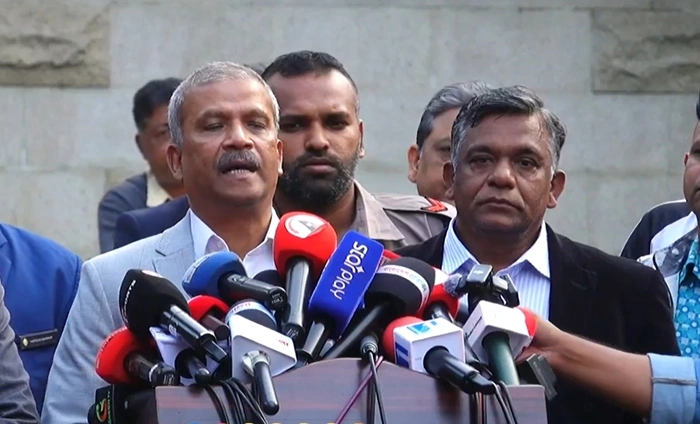
After initially citing government security concerns, Asif Nazrul now says the Bangladesh Cricket Board and national team players collectively decided to boycott the World Cup in India.
Dhaka, 10 February 2026 – Law adviser Asif Nazrul has claimed that the decision to boycott the upcoming Cricket World Cup in India was taken jointly by the Bangladesh Cricket Board (BCB) and the national team players, marking a shift from his earlier position that it was a government-led decision due to security risks.
Nearly three weeks earlier, Asif Nazrul had publicly stated that the government was not sending the players to India because of security concerns. However, speaking on Tuesday at an event where BCB donated Tk 2 crore to Dhaka University for the development of the Central Physical Education Ground, he said the choice was made collectively by the board and the cricketers.
“The decision was taken by the players and the cricket board. They made sacrifices for the safety of the players, the people of the country, and the dignity of Bangladesh. This will remain an exemplary decision,” Asif Nazrul said, adding that there was no scope for regret over the move.
The controversy intensified after pacer Mustafizur Rahman was dropped from the Kolkata Knight Riders on the directive of the BCCI amid pressure from hardline Hindu nationalist groups in India. BCB President Aminul Islam Bulbul initially refrained from commenting without full details, before calling a virtual board meeting to discuss the situation.
BCB directors had initially considered seeking security assurances from the ICC. However, following discussions with the government, the board formally requested the ICC to move Bangladesh’s matches from India to Sri Lanka. Asif Nazrul also met BCB President Bulbul, maintaining the same position during the discussions.
Despite multiple exchanges of letters, the ICC rejected the request. In a subsequent ICC meeting, only Pakistan supported Bangladesh’s stance, while other member nations voted against it. The ICC later made it clear that Bangladesh would have to play in India if it wished to participate in the tournament.
In response, Asif Nazrul held extended meetings with national team players. On 22 January, he stated that the decision not to play in India was due to security risks and was taken by the government.
Following the boycott, concerns arose over possible ICC sanctions. However, a meeting held in Lahore on 9 February involving the PCB, BCB, and ICC resolved the issue. The ICC confirmed that Bangladesh would face no sanctions or fines and would instead be given the opportunity to co-host an ICC event between 2028 and 2031.
Praising BCB’s handling of the situation, Asif Nazrul said the board’s “cricket diplomacy” ensured a positive outcome for Bangladesh, calling the decision one that should be taken again if similar circumstances arise.
Related News
You may like




Tom Holland Says Marvel Has a Plan for the Next Spider-Man
August 1, 2026
Elected News
-
Bangladesh Seeks UN Women Support on Digital Harassment and Women’s Empowerment
-

Bangladesh, Australia Discuss Human Trafficking, Irregular Migration and Rohingya Crisis
-
Bangladesh Plans Internet-Free Access to Mobile Banking and Financial Apps
-
DU to Open Undergraduate Admission Applications on 11 November, Tests Begin 5 December


